Global
  English
  Español
  Português
  Deutsch
  Français
  Italiano
  Español
  Nederlands
  Polski
  Čeština
  AE-English
  日本語
日本語  AU-English


Warehouses rarely reach their limits because of a single bottleneck during peak periods. The real challenge is the combination of increasing operational complexity and growing pressure on the workforce. Managers need to understand more quickly why processes are deviating from plan, while employees need clear guidance and useful feedback even when volumes are high. Operational AI and gamification can address both challenges. They help teams understand developments sooner, make progress visible, and maintain motivation under pressure. This provides a stronger foundation for decision-making and gives employees greater confidence during ongoing operations. The result is a warehouse that does more than absorb peak demand through additional capacity. It remains capable of responding effectively as conditions change. Using a compact peak-readiness check, this article outlines five questions warehouse leaders should ask before the next peak season.
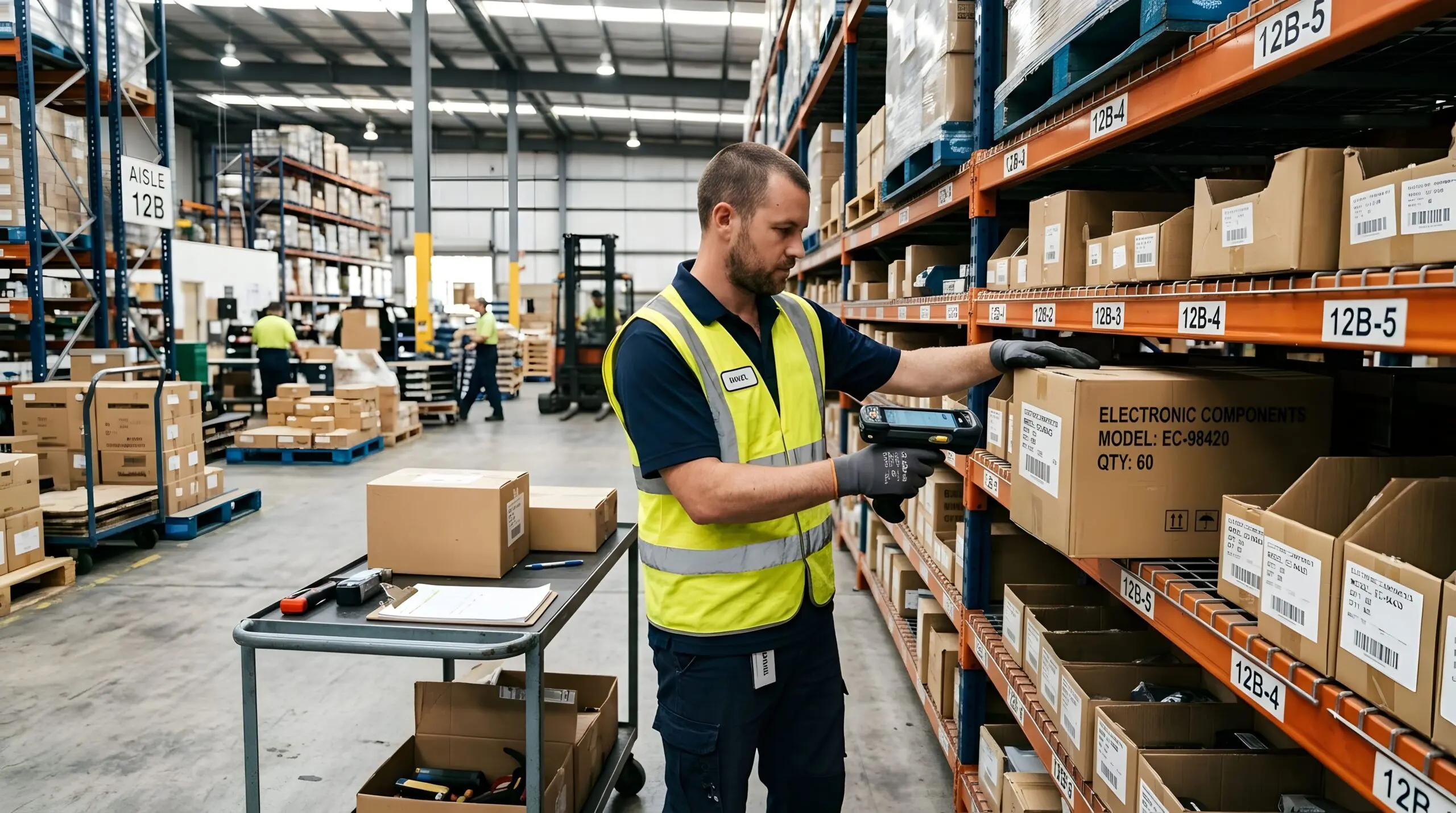
Peak periods are among the most demanding phases in warehouse operations. Black Friday, the holiday season, seasonal product lines, promotional items, and unexpected order surges do more than increase volume. They also change the operational dynamics of the warehouse. This pressure becomes particularly visible in order fulfillment and picking. When significantly more orders must be processed within a limited period, the demands on speed and accuracy increase. Priorities, travel paths, and order profiles may also change several times during a single shift. Processes must move faster, priorities must be adjusted more frequently, and managers must maintain a clear view of operations even as time pressure grows.
Many companies respond by adding employees, introducing extra shifts, and tightening performance targets. This response is understandable, but it does not address the entire challenge. Warehouse performance does not depend on available capacity alone. What matters is how quickly deviations are identified and understood, how clearly goals are communicated during daily operations, and whether employees receive reliable feedback on their performance even under intense pressure.
This is where the real bottleneck often emerges during peak periods. Throughput, quality, and response speed must all increase at the same time, yet managers often lack the time to examine operational relationships in detail or provide employees with regular guidance. Decisions become increasingly reactive, while performance is driven primarily through pressure and control. Instead of automatically creating a more stable process, additional capacity initially creates more coordination work during ongoing operations.
Peak-Readiness Check: Five Questions for Warehouse Leaders
1. Do You Understand Why a Process Is Falling Behind?
In many warehouses, the most important performance metrics are available at all times. Even so, it often remains unclear during ongoing operations why performance is declining in one area or why a seemingly minor deviation is affecting downstream processes. The data may show that something is not going according to plan, but it does not automatically provide the context managers need to make a quick decision. During peak periods, developing this understanding takes valuable time. Information must be consolidated, feedback must be collected, and potential causes must be evaluated while backlogs may continue to grow.
The assessment question is: Can your managers understand why a process is deviating from plan, or can they only see that a target is not being met?
2. Do You Know Where Intervention Is Actually Necessary?
Not every deviation requires an immediate response. Some delays resolve themselves later in the process, while others can affect multiple operational areas within a short period. When order volumes are high, managers may focus their attention on the most visible problems even when their overall impact is limited. Stable operations require more than receiving as many alerts as possible. Managers must be able to assess what each alert means for the overall process. Only then can they set meaningful priorities and direct resources to the areas where intervention is truly necessary.
The assessment question is: Can you distinguish between deviations that threaten downstream operations and those that will stabilize without additional intervention?

3. Can Employees Track Their Goals Throughout the Shift?
During peak periods, expectations for speed and accuracy increase. At the same time, employees often do not learn whether they have met their goals until the shift has ended. While they are working, they lack reliable guidance on how their performance is developing and how their work contributes to the team’s overall result.
This is particularly relevant in picking, where employees may process a large number of consecutive orders over long periods and have little opportunity to assess their progress during daily operations. Voice-directed processes provide a direct communication channel. Instructions and feedback are delivered through listening and speaking, creating a particularly intuitive form of interaction. Goals and feedback can therefore be incorporated into the existing work dialogue without requiring employees to interrupt their tasks, enter additional information, or look at a screen.
The assessment question is: Do your employees know where they stand during the shift, or do they receive feedback only after they can no longer influence their performance?
4. Does Your Performance Feedback Strengthen Motivation or Increase Pressure?
Performance metrics are necessary, but their effects can vary significantly. When they are used exclusively to monitor or compare individual employees, they can quickly create additional pressure. This is especially true when differences in experience, task structure, or working conditions are not sufficiently considered. Motivating feedback should therefore involve more than leaderboards or external rewards. It should make personal progress visible, communicate achievable goals, and strengthen employees’ confidence in their ability to perform their tasks successfully. This supports intrinsic motivation instead of relying solely on targets and control to drive performance.
The assessment question is: Does your current feedback help employees recognize their own development, or does it primarily show them how they compare with others?

5. Can Your Team Continue to Act Effectively as Priorities Change?
Peak periods rarely follow the same pattern for several consecutive days. Order profiles change, bottlenecks move, and resources must be reassigned at short notice. The more frequently these adjustments are required, the more important it becomes for managers to maintain visibility and for employees to understand new priorities. The ability to act effectively does not result from constant monitoring. It requires decisions to be based on a clear understanding of the current situation and goals to be communicated in a way that helps the team maintain direction as conditions change.
The assessment question is: Can your warehouse respond to new priorities without every adjustment creating additional coordination work, uncertainty, or performance pressure?
What Peak Readiness Requires in Practice
The first two questions show that operational management during peak periods does not fail because metrics are unavailable. The greater challenge is that individual status updates make it difficult to determine why a process is deviating from plan, what effects the deviation may have, and where intervention would deliver the greatest impact. This requires an intelligence layer that does more than collect information from ongoing operations. It must make that information usable within the context of the relevant processes. This is where EPG AURA comes in. The AI-native environment for supply chain execution helps decision-makers understand relevant developments sooner and make decisions based on a more reliable foundation of information.
Questions three and four reveal a second gap. Employees know what is expected of them, but often receive little feedback during the shift on how their performance is developing or what progress they have already made. In picking, voice-directed work provides a suitable foundation because employees are guided directly through order fulfillment using listening and speaking. They receive the next step through voice instructions and may, for example, confirm check digits at the pick location. This allows the system to verify that they are at the correct location and working with the intended item. It reduces errors and provides additional confidence, particularly for new or temporary employees. LYDIA Gamification expands this voice-directed dialogue with achievable goals, levels, medals, and team challenges. Progress becomes visible without requiring an additional screen or step in the workflow. Because game-related feedback is provided during appropriate movement phases between picks, order processing remains the primary focus. The approach does not rely exclusively on external rewards. It strengthens employees’ sense of competence and can therefore also support intrinsic motivation.
The fifth question brings both requirements together. A warehouse can remain responsive as priorities change only when managers understand developments in the appropriate context and employees know what they are working toward.
Conclusion: Peak Readiness Begins With Direction
Peak periods cannot be managed through additional employees and extra shifts alone. What matters is whether operational changes are understood early enough and whether employees can recognize where they stand and what they are working toward, even under significant pressure. EPG AURA and LYDIA Gamification address these two requirements. EPG AURA provides the context needed to make informed decisions during ongoing operations. LYDIA Gamification makes progress immediately visible and helps employees assess their own performance. Together, they create a warehouse operation that does not wait for backlogs to grow or motivation to decline before responding. It remains capable of acting effectively throughout extended periods of high demand.