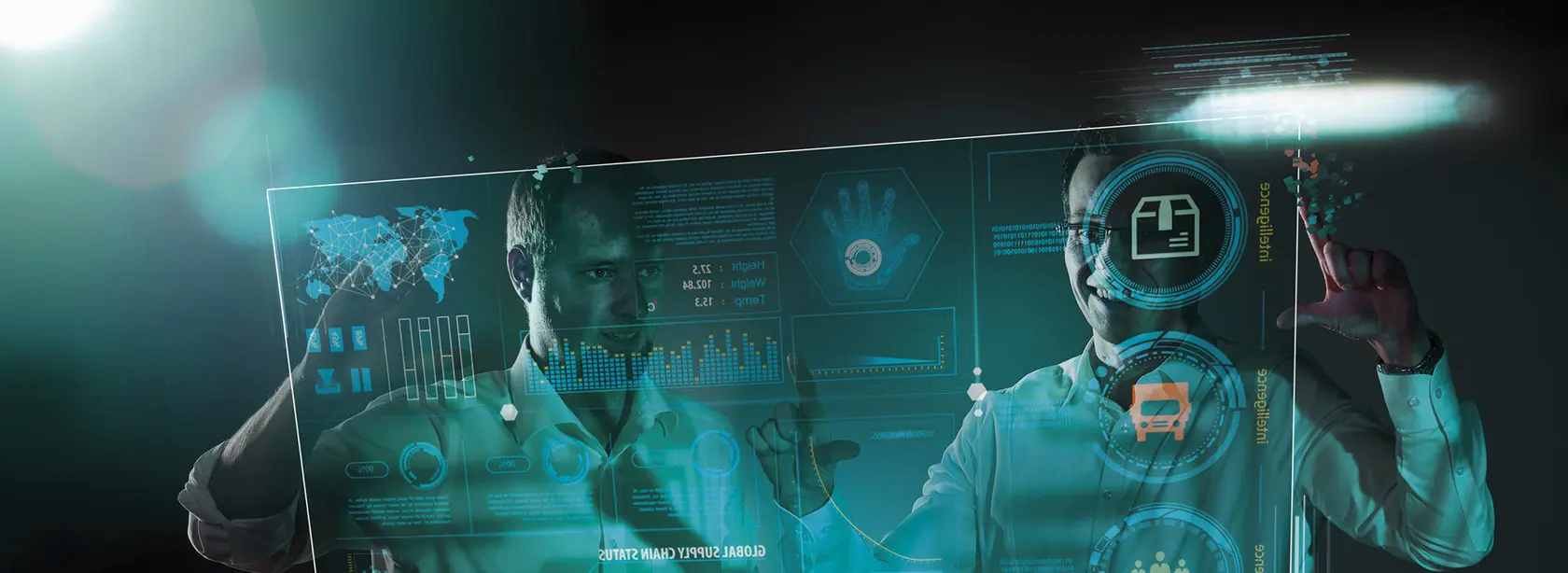
The abbreviation ERP stands for enterprise resource planning and comprises the planning of all company resources. This not only includes human and material resources, but also financial and informational resources. The goal of ERP is to provide all necessary resources in a timely and demand-oriented manner and to optimize the value chain. In most cases, companies do this with the support of ERP systems. These are able to bring order and structure to the internal flood of information. With the help of AI components and machine learning processes, recommendations for action can then be derived in a subsequent step based on historical data and probability calculations. Depending on the business sector, there may be software solutions that overlap with or complement the tasks of enterprise resource planning. For example, there are special SES solutions for planning, managing and controlling logistics processes. SES stands for supply chain execution system and encompasses all relevant areas of supply chain management. One of the most important prerequisites for ERP or SES solutions is IT infrastructure. Without digitalization and interfaces, ERP systems have no way of accessing the information within a company. Transparent processes are thus one of the most important basic requirements.
Advantages of an ERP system:
- cost savings
- conflict avoidance
- process streamlining
- flexibility
- transparency
Disadvantages of an ERP system:
- usually costly, lengthy implementation
- IT infrastructure required


 English
  Español
  Português
  Deutsch
  English
  Français
  Italiano
  Español
  Nederlands
  Polski
  Čeština
  AE-English
  日本語
日本語  AU-English