
 English
 Español
 Português
 Deutsch
 English
 Français
 Italiano
 Español
 Nederlands
 Polski
 Čeština
 AE-English
 日本語
 AU-English



Why Smarter Time Slot Booking Starts Before the Delivery Is Booked
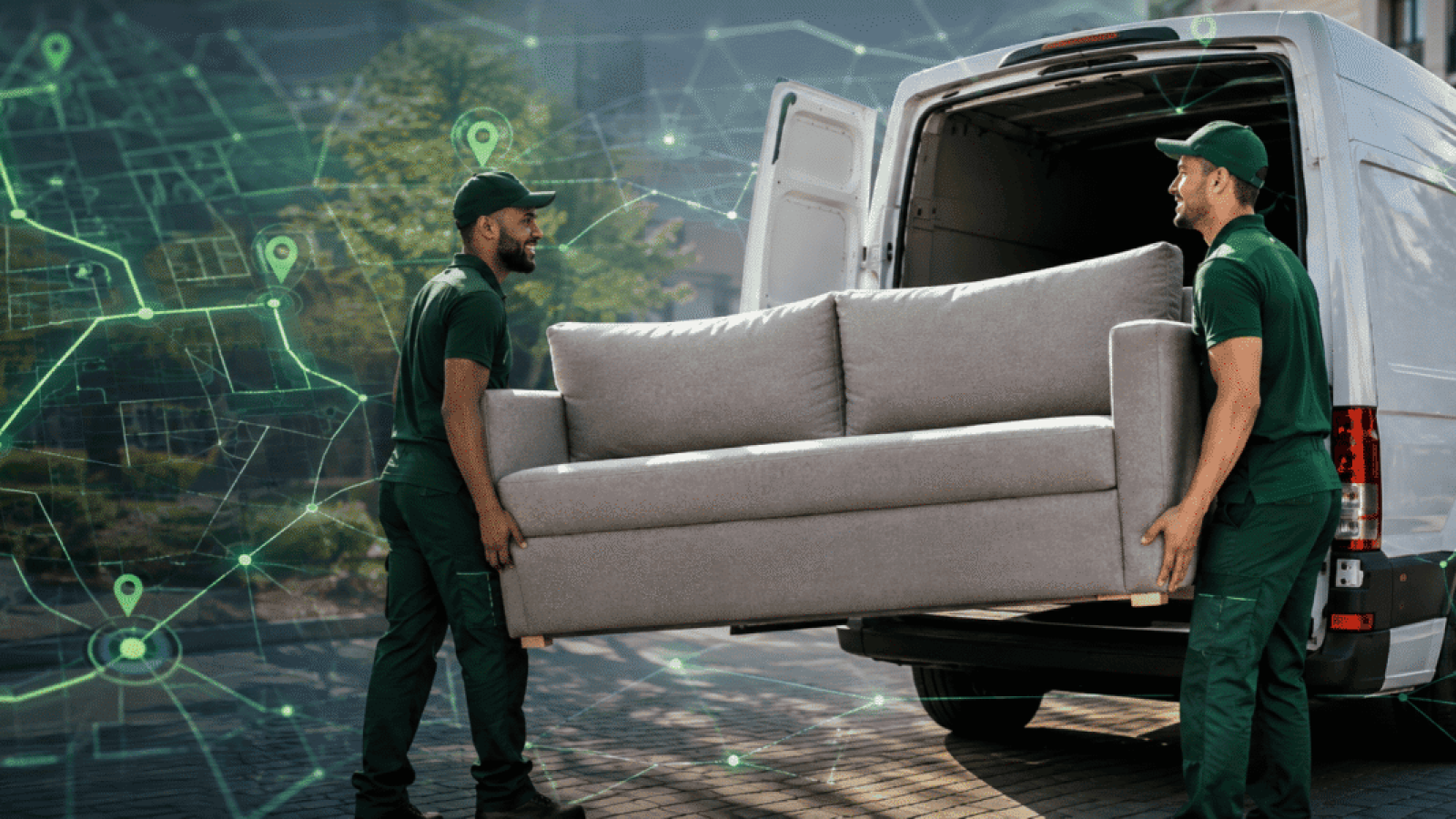
Two-person delivery route planning is one of the most demanding forms of last-mile logistics. The service has many names including 2-man handling, bulky goods delivery, large-item delivery, in-home delivery, or white-glove delivery, but the underlying challenge is the same. Every stop takes up vehicle capacity, the time of a two-plus-person crew, and a significant amount of service time inside the customer’s home.
Delivering a sofa, refrigerator, washing machine, or other large item is fundamentally different from delivering a parcel. Two-person home delivery may involve room-of-choice placement, assembly, installation, removal of old appliances, difficult access conditions, and tightly coordinated customer appointments. Installing a dishwasher on the third floor of an apartment without an elevator and with an antique plumbing system is no small feat.
Despite the time-sensitive nature of two-person delivery logistics, one of the most important decisions is made before route optimization even begins: The customer chooses a delivery appointment first. The planner then tries to build the best possible route around it. For complex bulky goods logistics, that sequence deserves another look.
A time window determines where a delivery team must be at a particular point in the day. It influences which other deliveries can be combined with that stop, how far the vehicle must travel, and how much productive capacity remains available. It’s not practical to optimize routes around a booking. Rather, two-person delivery route planning should begin before the appointment is booked, informing the time slots that the company can then offer.
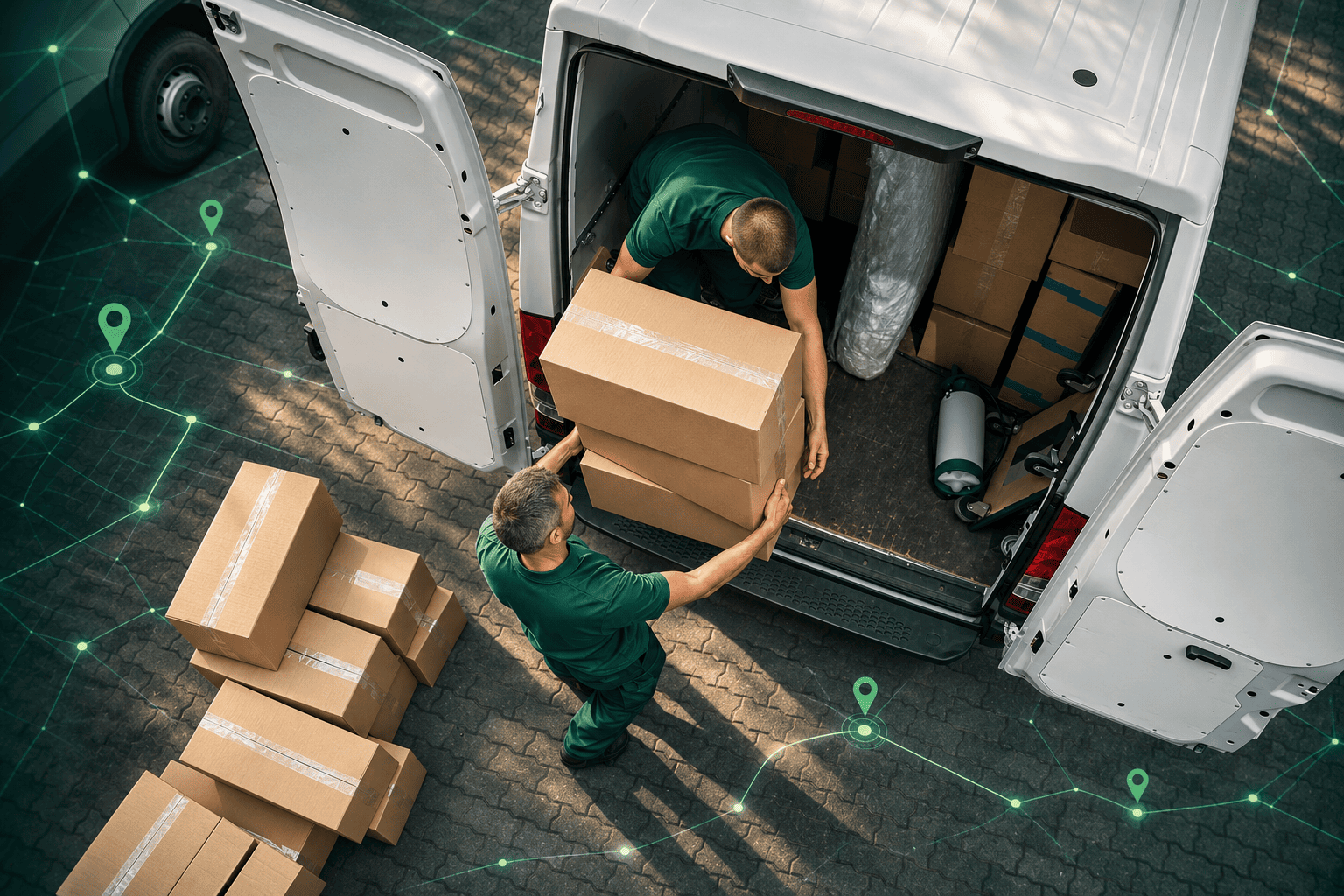
Why Two-Person Delivery Route Planning Is Different From Parcel Delivery
In conventional parcel delivery, route density provides flexibility. A driver may complete dozens or even hundreds of stops, and individual handovers are usually short. The economics of large-item delivery logistics are very different.
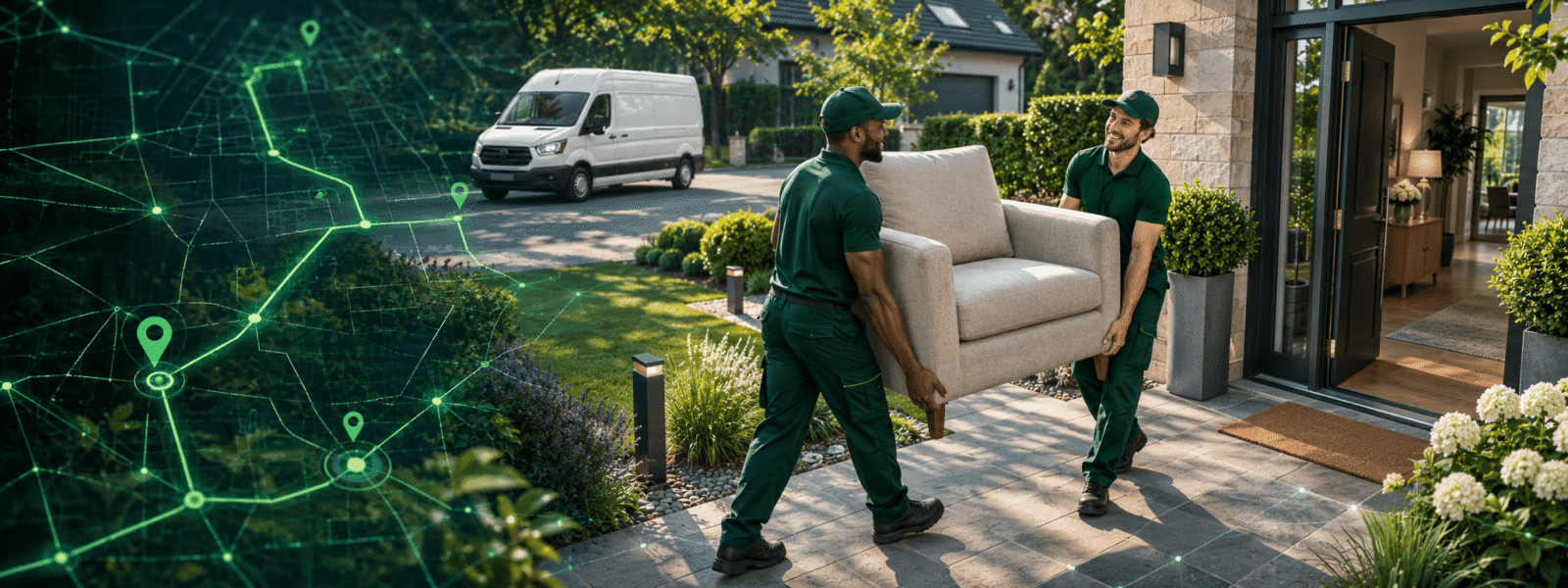
A typical in-home delivery stop can involve carrying an item through a customer’s home, navigating stairs or narrow access points, connecting an appliance, assembling furniture, removing packaging or taking away an old product. In premium white-glove delivery or delivery and installation services, the crew spends much longer at each address than a parcel driver would. That makes both people and vehicles expensive, capacity-constrained resources.
A poorly positioned stop impacts an entire route. It may create additional mileage, require a major detour, leave unusable gaps in the working day, or make another delivery impossible. This is especially true in furniture and appliance delivery, where service duration can vary considerably from customer to customer.
The Hidden Cost of Booking Time Slots Before Route Optimization
Most heavy and bulky delivery processes follow this sequence:
Customer places an order → customer selects time slot → logistics plans the route From a customer perspective, it makes sense. A calendar is displayed and the customer chooses an appointment which is most convenient for them.
From a route planning perspective, every randomly booked delivery time slot becomes a costly constraint. Imagine that five delivery customers in the same region could form a highly efficient tour. If those customers independently choose incompatible delivery windows, route optimization software has limited room to maneuver.
The planner may have to accept:
- Additional driving distance
- Additional routes
- Underutilized vehicles
- Team overtime
- Idle time between appointments
The route-planning algorithm is being asked to optimize a problem after many of its most important decisions have already been made. For two-person home delivery, that can become particularly expensive because each inefficient kilometer ties up not only a vehicle but an entire delivery crew.
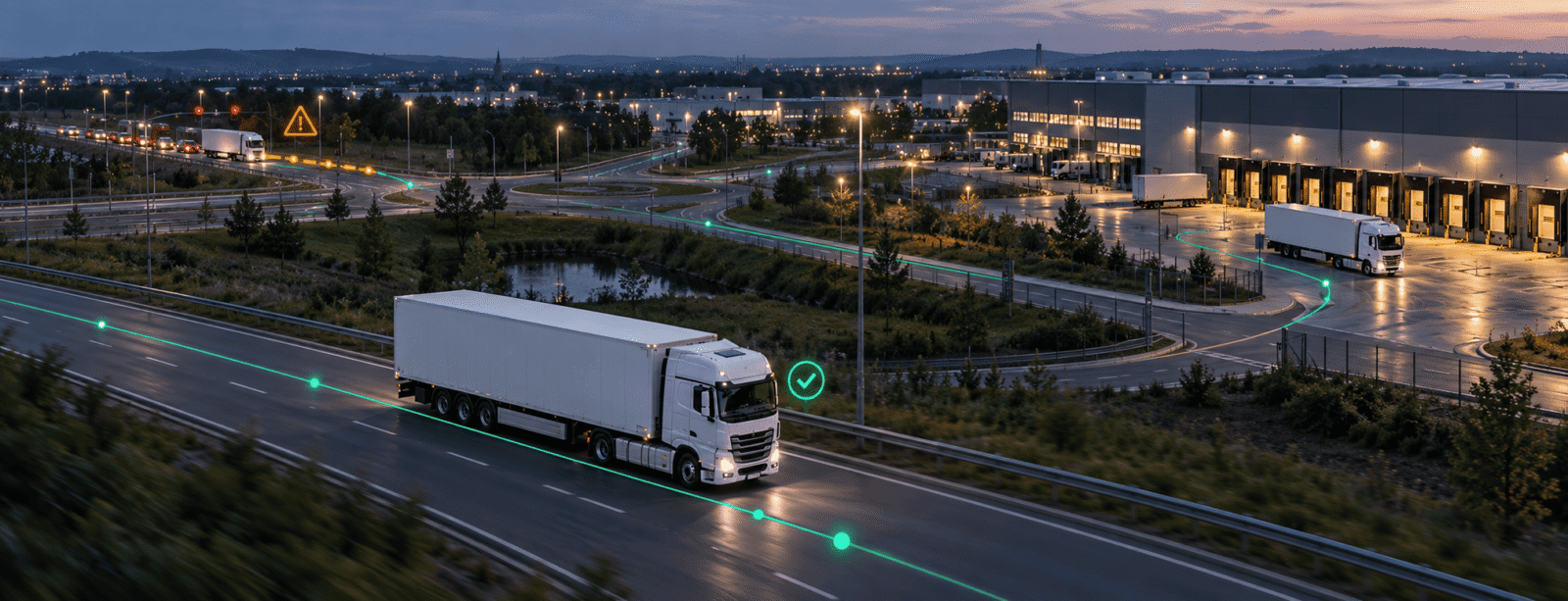
Intelligent Time Slot Booking for In-Home Delivery and White-Glove Logistics
This concept is described as intelligent time slot booking or delivery time slot optimization. An intelligent system asks how well certain appointment windows fit the delivery network. In this way, time slot booking becomes part of the optimization process itself.
An appointment might be attractive because another furniture delivery is forecast nearby. Another may be less attractive because it would require a vehicle to return to an area already served earlier in the day.
For home delivery with installation, the logic can also account for longer service durations and the way those services affect the shape of the route. Those calculations happen behind the customer interface. The consumer simply sees a selection of suitable appointment options.
Customer Choice and Two-Person Delivery Efficiency Are Not Opposing Goals
There is an understandable concern that showing fewer delivery windows means giving customers less flexibility, but customer experience is rarely determined by the absolute number of choices displayed on a booking page. How well a company can uphold their deliver promise is more important.
For in-home delivery, customers may need to remain at home, clear access routes, arrange time off work, or coordinate with other people. Reliability therefore has unusually high value. A large number of theoretically open slots does not automatically create a better customer experience. Ten possible appointments are not necessarily better than four appointments backed by robust routes and realistic travel plans.
Smarter time slot booking supports both customer flexibility and operational reliability. For specialized last-mile delivery, the most customer-friendly appointment may ultimately be the one the operation can keep with the greatest confidence.
How Route Optimization Improves Delivery Punctuality and ETA Accuracy
The customer-experience impact continues after booking. Better route structures can reduce the number of fragile dependencies inside a delivery day.
One furniture installation takes longer than expected. Traffic builds. Difficult building access delays the crew. The next delivery starts late. Every appointment that follows becomes increasingly difficult to keep. More geographically coherent large-item delivery routes create additional resilience.
This is particularly important in in-home delivery because service duration is inherently more variable than a doorstep parcel handover. Good last mile route planning creates a route that is better able to cope with uncertainty.
Bulky Goods Delivery Optimization Can Reduce More Than Mileage
Reduced driving distance is one of the most intuitive benefits of delivery route optimization, but it is not the only one.
For a two-person delivery operation, optimization can influence several interdependent cost drivers at once.
- Fewer kilometers lower energy consumption and reduce vehicle wear.
- Denser routes improve utilization of both vehicles and crews.
- Smarter time slots reduce the need for expensive special journeys.
- Greater planning stability lowers required replanning.
- Optimized capacity increases productivity without increasing vehicles or personnel.
That is especially important in furniture and appliance delivery, where labor is a major component of the cost base.
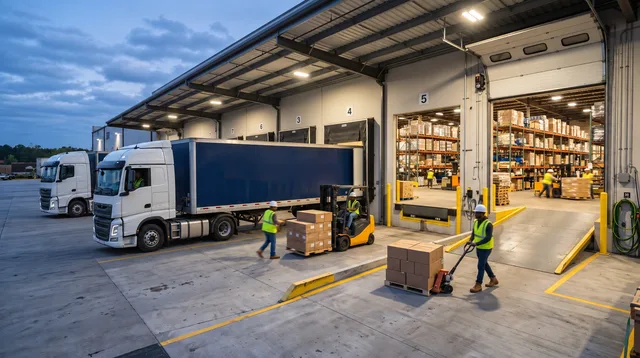
How Route Planning Software Supports Commitment Optimization
Logistics companies need to change how they think about route planning software. Historically, route optimization has concentrated on finding the best routes based on rigid constraints.
This can work, but another approach works better. Instead of optimizing only the execution of existing commitments, bulky goods logistics providers can optimize the commitments themselves. The most sophisticated logistics planning combines route optimization, demand forecasting and time slot booking in one continuous decision process.
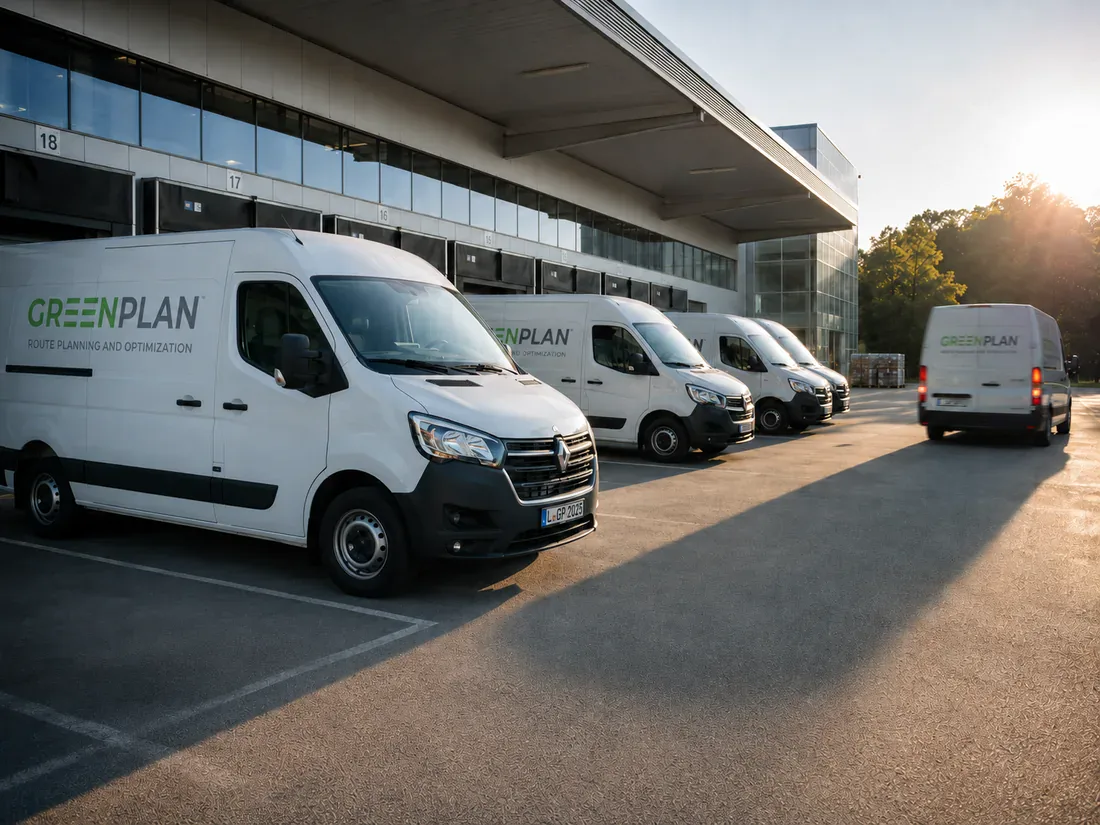
Where Greenplan Route Planning and Optimization Fits In
This is the principle behind Greenplan Route Planning and Optimization. Greenplan uses algorithmic route planning to consider operational constraints and calculate efficient tours with potential delivery appointments that already fit economically attractive route structures. Customers like Hermes have seen particular value in the intelligent booking capabilities for their complex 2-person delivery services. The relevance is increasingly reflected across the industry.
For years, the industry has become increasingly sophisticated at optimizing routes once orders have entered the transport network. The next step is to move optimization upstream. For two-person delivery route planning, that means treating delivery appointments as part of the routing problem rather than as immutable inputs to it. When historical demand, forecasting, route optimization with time windows, and intelligent booking work together, they enable fewer kilometers, higher vehicle and crew utilization, more stable tours, lower transport costs, more reliable ETAs and a more positive customer experience.