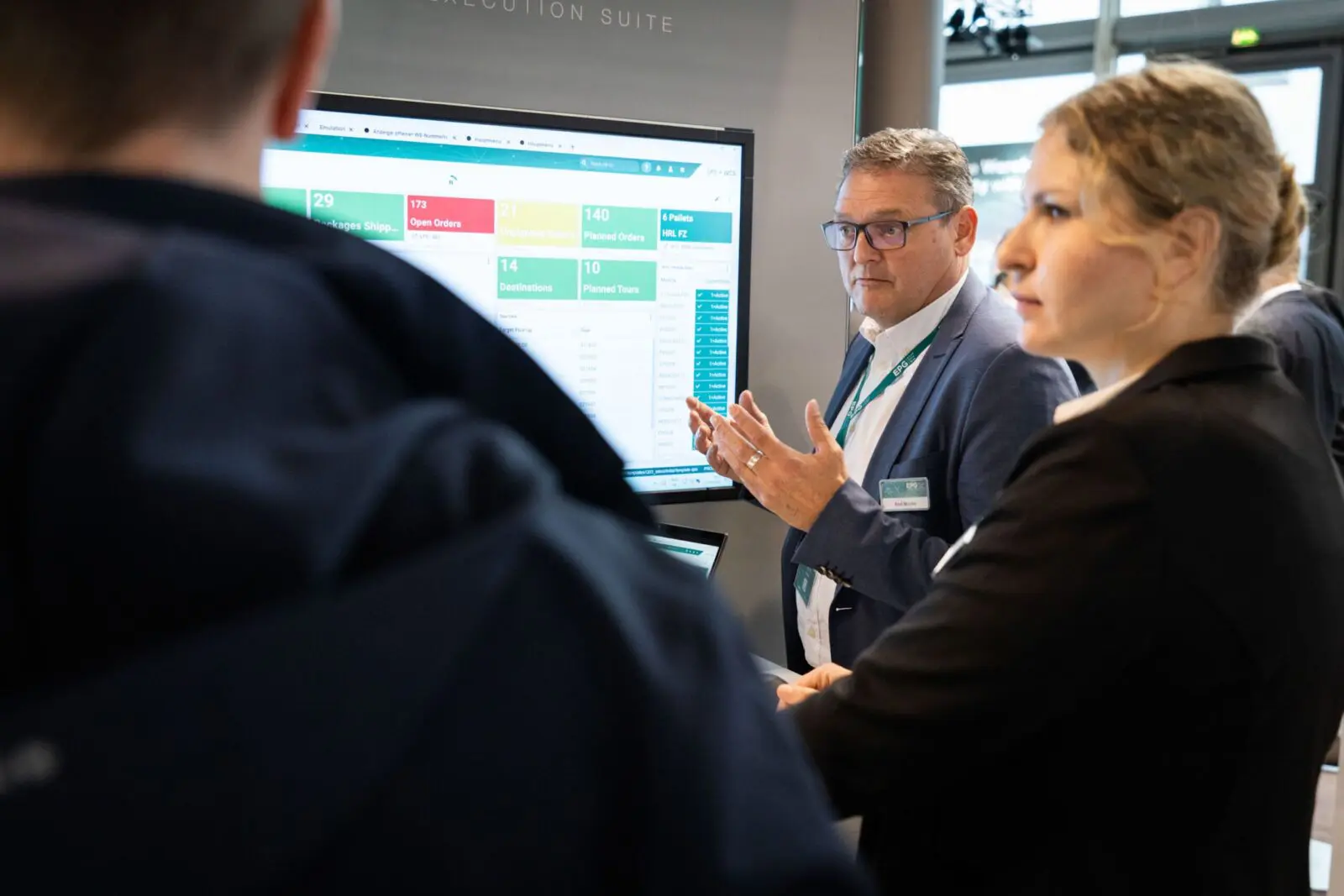

 Global
 Español
 Português
 Deutsch
 English
 Français
 Italiano
 Español
 Nederlands
 Polski
 Čeština
 AE-English
 日本語
 AU-English
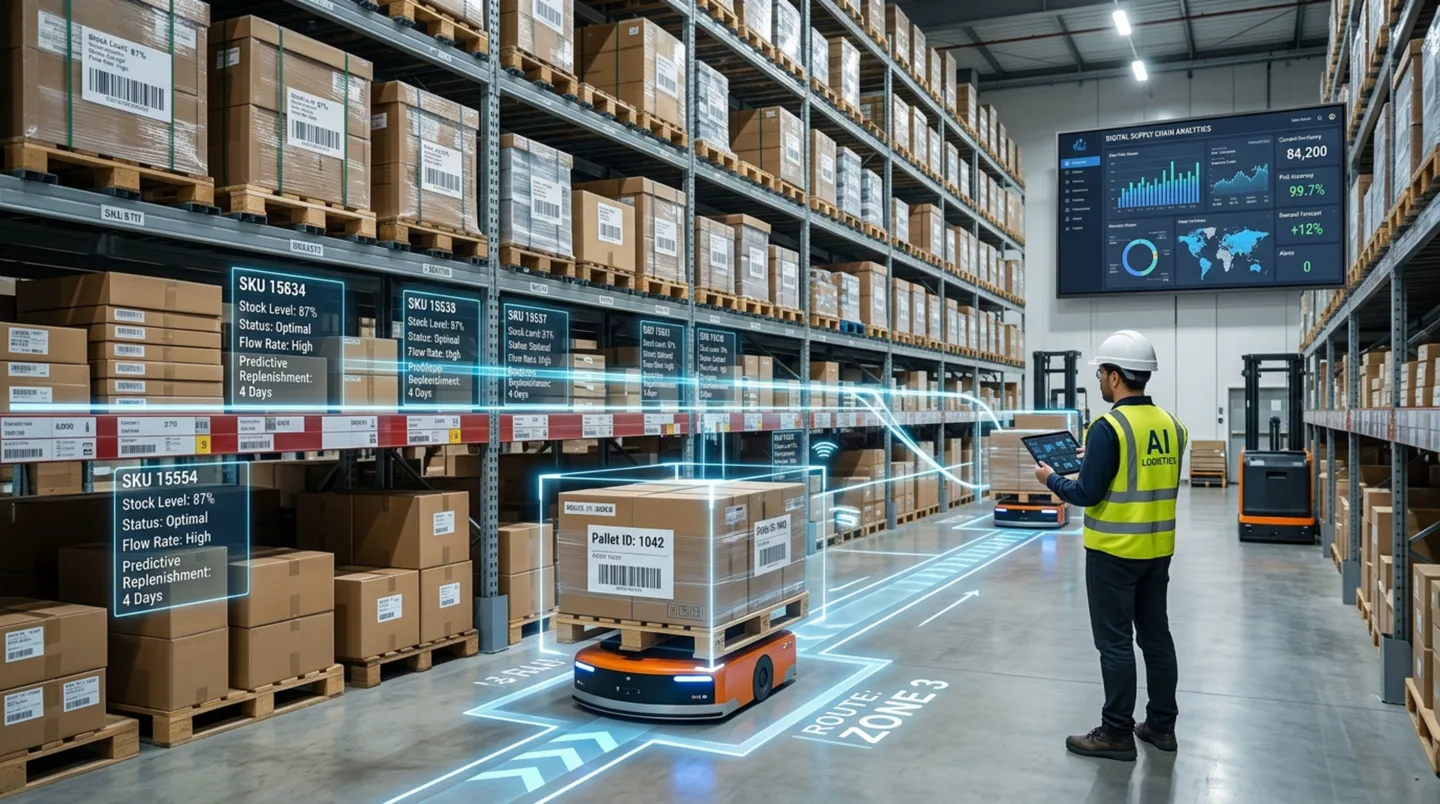
EPG and Microsoft are joining SupplyChainBrain for a live webinar to explore why AI doesn’t always improve warehouse productivity and how businesses can change that. Here’s a sneak peek at the coming conversation.
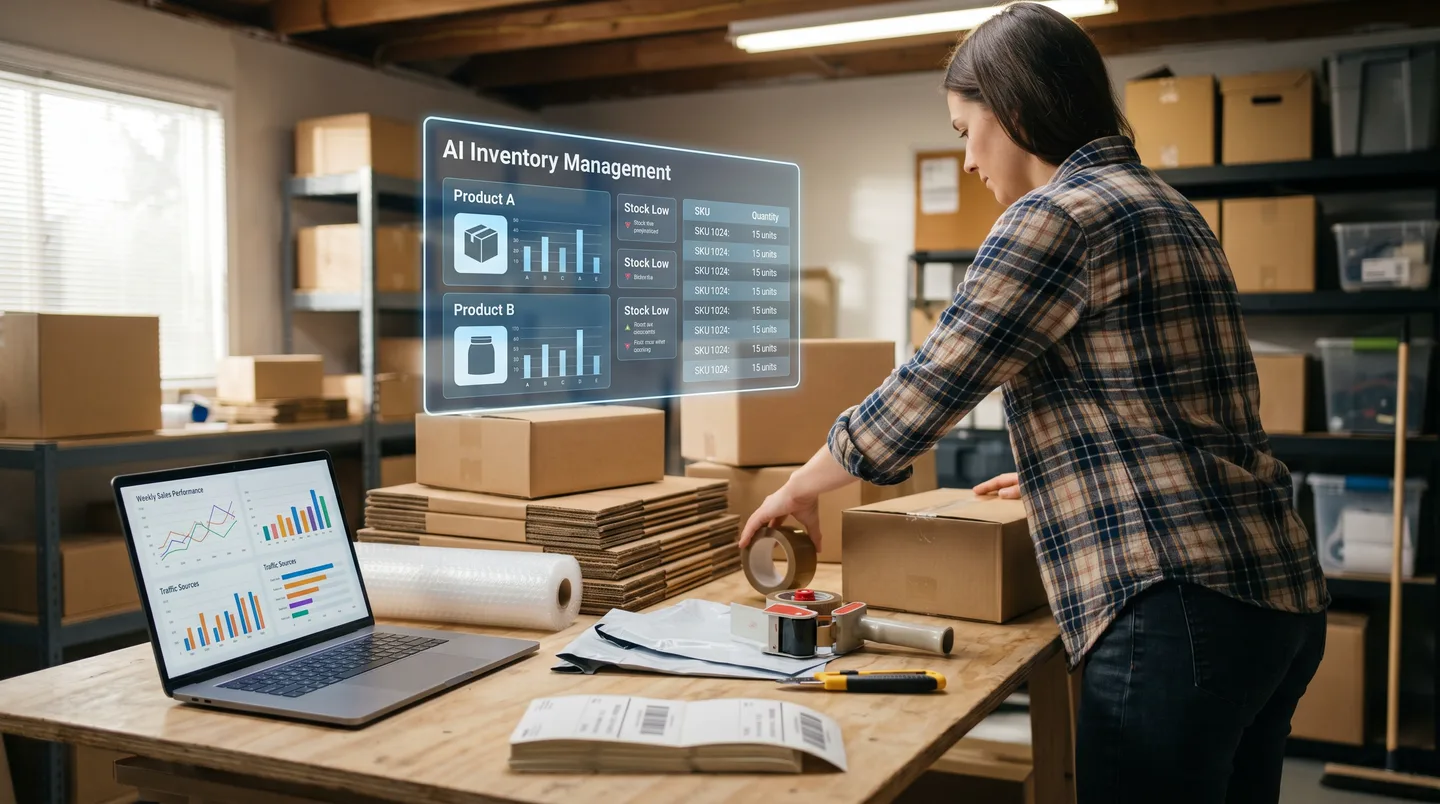
November 12 | 11:00 AM ET
Featuring EPG and Microsoft | Hosted by SupplyChainBrain
REGISTER FOR THE WEBINAR
AI in warehouse operations has impressive capabilities, but despite growing investment, many logistics teams grapple with the same old speedbumps. Employees often spend time hunting information and asking supervisors for help when answers are already in the company’s systems.
Supply chains are rich in data, but warehouse AI can’t leverage that data if the infrastructure isn’t clean. In their joint webinar, EPG and Microsoft identify what’s holding productivity back and how conversational AI technology can make data more user-friendly.
What’s Slowing Down AI in Warehouse Operations?
Warehouse efficiency is typically measured in order accuracy and throughput, but these metrics don’t measure the small frustrations tally up over a shift. For organizations exploring AI in warehouse management, those overlooked interruptions can reveal valuable opportunities for warehouse process optimization.
When an order hasn’t shipped, the simple question is “why?” but the answer often involves a Sherlock-sized effort to deduct the cause(s). The warehouse management system might confirm that picking is complete, but finding the actual cause could mean consulting another application, tracking down a work instruction, or asking a supervisor to investigate. By the time the answer arrives, several people have puzzled over a question that should have been simple.
Individually, these interruptions might seem insignificant, but the time spent searching and waiting for answers can become a considerable drain on productivity when added up across a shift. So how can organizations recognize the hidden inefficiencies that persist despite increasingly sophisticated warehouse technology? The potential of AI in warehouse operations lies partly in making these bottlenecks visible and quickly fixable, but only if it’s working with a solid foundation.
Making Warehouse Information Work as Hard as Your People Do
Warehouses are prolific data producers, but that warehouse data doesn’t always travel easily between systems or reach the employees who need it. Effective warehouse data integration is therefore an important part of making operational information accessible. Conversational AI in logistics can ease access to that information. Rather than requiring employees to understand where specific data is stored or how to navigate a particular interface, AI-powered warehouse assistants automatically retrieve relevant answers through natural-language questions.
Voice technology adds another dimension, particularly in environments where employees need to keep their hands and attention focused on physical tasks. Workers can access relevant guidance through spoken interaction, provided the necessary information sources are connected and available. When John Doe forgets the Protocol XY, but doesn’t want to ask the floor manager for the third time that week, he has an easy solution.
EPG is bringing these capabilities into supply chain execution through EPG AURA, its AI-powered environment for logistics operations. Its Conversation Intelligence capabilities help employees access operational information and process guidance through natural interaction, including voice-based communication with LYDIA Voice.
During the webinar, EPG and Microsoft will explore how this approach can reduce unnecessary system navigation and make existing IT investments more useful to frontline teams.
Where Should You Start with AI in Warehouse Operations?
The possibilities for warehouse AI might seem daunting, but getting started doesn’t have to involve an ambitious overhaul of existing processes. In many cases, the most practical opportunities can be found by examining the everyday activities that employees have come to accept as unavoidable.
How often does someone interrupt a supervisor to ask about an order status? How many applications must an employee consult to resolve a routine exception? Which instructions are available somewhere in the organization but consistently difficult to locate when they’re needed?
Questions like these can help uncover promising applications for AI in warehouse operations. A useful first step is to identify recurring information bottlenecks and assess whether easier access could reduce delays or repetitive work. From there, organizations can prioritize manageable use cases and evaluate their impact through measures such as speed of exception resolution.
We’re past the stage of simple AI experimentation. AI in warehouse operations must make an observable difference to daily execution. This practical approach will be a central theme of the webinar, with EPG and Microsoft discussing how businesses can identify suitable starting points to introduce conversational AI into warehouse workflows.
Join EPG and Microsoft to Put Warehouse AI to Work
AI has tremendous potential to improve warehouse productivity, but realizing that potential requires understanding where work gets complicated and why. When information is easy to access and understand, it empowers smarter execution.
On November 12, Jett Chitanand, President of EPG Americas and Bernd Mayer, Chief Technology Strategist at Microsoft, will explore these opportunities in “Why Isn’t AI Speeding Up Your Warehouse?”, a live webinar moderated by Robert Bowman, Editor-in-Chief of SupplyChainBrain.
The session will explore how to:
If you’re ready to move beyond the promise of AI and explore what it can actually do for your warehouse operations, join us for the conversation.
Boost
Efficiency
Eliminate
Errors
Take
Full Control