Global
  Español
  Português
  Deutsch
  English
  Français
  Italiano
  Español
  Nederlands
  Polski
  Čeština
  AE-English
  日本語
日本語  AU-English


- Tags ai in logistics, voice picking
Incremental improvements are no longer enough. Execution systems must become more intelligent.
This is where AI-driven voice picking is reshaping warehouse performance.
Traditional voice systems replaced paper lists and handheld workflows. That was a meaningful step forward. Today, AI-driven voice picking represents the next phase of evolution. It transforms voice from a simple input method into an adaptive execution layer that improves responsiveness, supports workforce diversity, and generates operational insight in real time.
For distribution centers focused on sustainable productivity gains, AI-driven voice picking is becoming the new performance standard.
The Evolution of AI-Driven Voice Picking
Voice picking once meant hands-free confirmation and improved accuracy. Modern AI-driven voice picking enhances how work is executed at a deeper level.
AI enhances speech recognition in dynamic, high-noise environments while reducing or eliminating the need for voice template training. It enables more flexible workflow configuration, supports real-time language translation, and integrates performance feedback directly into daily execution.
These enhancements move voice systems from static scripts to intelligent execution platforms.
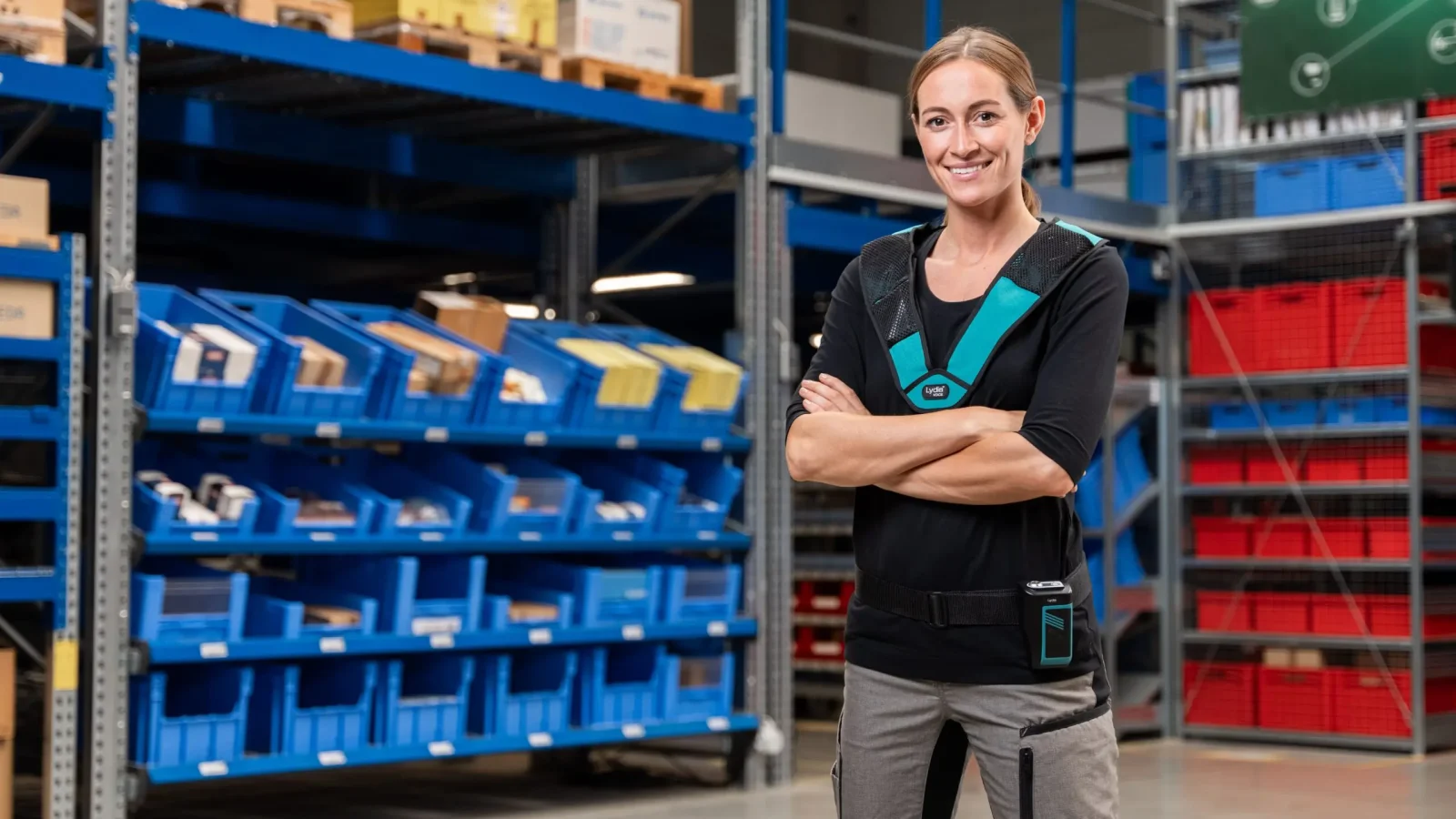
EPG’s LYDIA Voice is designed around this principle. As a fully voice-driven solution enhanced by AI capabilities, it enables scalable AI-driven voice picking across complex warehouse environments. When deployed on Zebra Technologies enterprise mobile computers and headsets, the combination creates a reliable, intelligent execution environment.
The measurable impact of AI-driven voice picking is reshaping expectations in warehouse operations. When compared to legacy voice solutions, LYDIA Voice has enabled organizations to increase efficiency by 15%, reduce operating costs by as much as 30%, and cut training time by 80%. These are not marginal gains. They reflect a fundamental improvement in how execution systems support both people and processes.
Platforms like LYDIA Voice illustrate how these results are achieved by eliminating process friction, removing voice template training, and embedding intelligence directly into daily workflows. When deployed on Zebra enterprise mobile computers and headsets, AI-driven voice picking combines intelligent software with reliable edge hardware to deliver consistent performance across shifts, facilities, and workforce profiles.
AI-Driven Voice Picking and the Multilingual Workforce
Workforce diversity is now structural in logistics. In many distribution centers, multiple languages are spoken across a single shift. When systems assume one common language, training slows, errors increase, and supervisors spend valuable time translating instead of optimizing operations.
Language barriers should not limit performance.
One of the most practical applications of AI-driven voice picking is intelligent language support embedded directly into execution workflows. Within the LYDIA Voice platform, two distinct capabilities address multilingual operations. Multi-language recognition allows workers to interact with the voice picking system in their preferred language during task execution, ensuring seamless dialogue within the voice workflow itself. In addition, LYDIA Live Translation enables real-time translation of conversations between employees, supporting communication across more than 40 languages without requiring manual interpretation.
Together, these capabilities allow operations to remain unified under a single process framework while removing language friction from both system interaction and team communication.
The benefits extend beyond communication. Onboarding accelerates. Cross-training becomes easier. Supervisors gain consistency across multilingual teams. Organizations can expand their available labor pool without introducing additional operational complexity.
In this environment, AI-driven voice picking reduces language-related friction and keeps productivity, safety, and performance at the forefront of warehouse operations.
Engagement and Performance in AI-Driven Voice Picking
Technology alone does not determine warehouse performance. Human engagement directly influences speed, accuracy, and consistency.
Modern AI-driven voice picking environments embed feedback directly into daily workflows rather than layering separate management tools on top. Gamification, the use of game-inspired elements such as milestones, recognition to encourage engagement, and progress tracking, is designed to elevate performance by activating intrinsic motivation. When employees can see their progress, receive real-time feedback, and experience meaningful recognition, engagement increases. Hitting targets becomes a natural and sustainable outcome rather than a forced objective. Milestones, progress indicators, and positive reinforcement are delivered directly through the voice interaction itself, keeping employees focused and motivated without interrupting task execution.
With LYDIA Gamification, supervisors can define measurable goals tied to productivity, accuracy, or quality, but the emphasis remains on experience as much as outcome. Pickers receive live feedback through their voice interface, creating a sense of achievement and forward momentum throughout the shift. When employees feel recognized and see their progress in real time, engagement increases naturally. Stronger intrinsic motivation supports higher retention, more consistent performance across shifts, and measurable gains in throughput. Improved results become the logical outcome of a workforce that is genuinely invested in its work.
The value is not novelty. It is reinforcement. When expectations are visible and progress is immediate, performance stabilizes and incremental improvements compound over time.
This reflects a broader shift in supply chain execution. Systems are evolving from command-and-control platforms into performance enablement environments.
Within the broader EPG ecosystem, this philosophy aligns with EPG AURA, the AI-native intelligence layer of the EPG ONE Suite. AURA connects execution systems, contextual data, and real-time insight to support adaptive decision-making. When combined with AI-driven voice picking, it creates a continuous feedback loop between frontline execution and strategic optimization.
From Execution Data to Operational Intelligence
Another defining feature of AI-driven voice picking is visibility.
Every voice interaction generates operational data. When transformed into dashboards and analytics, that data reveals performance trends, bottlenecks, and workforce utilization patterns. This allows warehouse leaders to move beyond reactive management toward proactive optimization.
When paired with Zebra mobile computing and data capture technologies, AI-driven voice picking becomes both an execution engine and an intelligence source.
Reliable hardware at the edge matters. Zebra devices provide durability and performance consistency in demanding warehouse environments. Intelligent software layered on reliable hardware creates sustainable operational improvement.
A Pragmatic Path to Adoption
Technology transitions in warehouse environments must be deliberate. Modern supply chains do not replace execution systems on instinct. They test, validate, and scale based on measurable results.
Flexible subscription models make it easier to adopt AI-driven voice picking software without heavy upfront investment. Subscription licensing allows organizations to:
Minimize initial capital expense
Avoid rigid long-term commitments
Simplify budgeting and cost management
Stay current with ongoing feature enhancements
Scale usage up or down as operational needs evolve
This approach aligns with how agile operations manage technology. It reduces financial risk while preserving strategic flexibility.
For organizations already running a voice system, LYDIA Co-Exist provides an additional layer of confidence. It enables AI-driven voice picking to run alongside an existing voice solution in live operational conditions. Teams can compare performance, validate gains, and assess ROI without disrupting current workflows. This reduces transition risk and supports informed decision-making.
Beyond deployment flexibility, visibility remains critical. LYDIA Warehouse Intelligence transforms voice interaction data into actionable performance insights across productivity, process flow, and workforce utilization. When paired with Zebra’s enterprise-grade mobile computing and reliable data capture at the edge, this creates a closed feedback loop between execution and optimization.
In this model, AI-driven voice picking is not only easier to adopt; it is easier to measure, validate, and continuously improve.
Experience AI-Driven Voice Picking at MODEX 2026
Concepts such as adaptive workflows, multilingual communication, and embedded engagement strategies are best understood through experience.
Join EPG at MODEX 2026 in Atlanta from April 13 to 16 to explore AI-driven voice picking live in our booth, B11122. Participate in hands-on demos and a live voice picking challenge that brings measurable productivity improvements to life. To experience LYDIA operating on Zebra mobile devices, visit our team in the Zebra Technologies booth B11902 for a live demo of our integrated environment.
If you can’t join us at MODEX, let’s connect virtually and explore AI-driven voice picking together.
The Strategic Takeaway
AI in logistics is often associated with predictive analytics and automation. Its impact on frontline execution is equally significant.
AI-driven voice picking enhances human capability, improves operational consistency, and converts execution data into actionable insight. It supports multilingual workforces, reduces onboarding friction, and enables measurable productivity improvements.
For warehouses seeking scalable gains without increasing labor dependency, AI-driven voice picking is not a future concept. It is an operational advantage available today.
To learn more, explore: